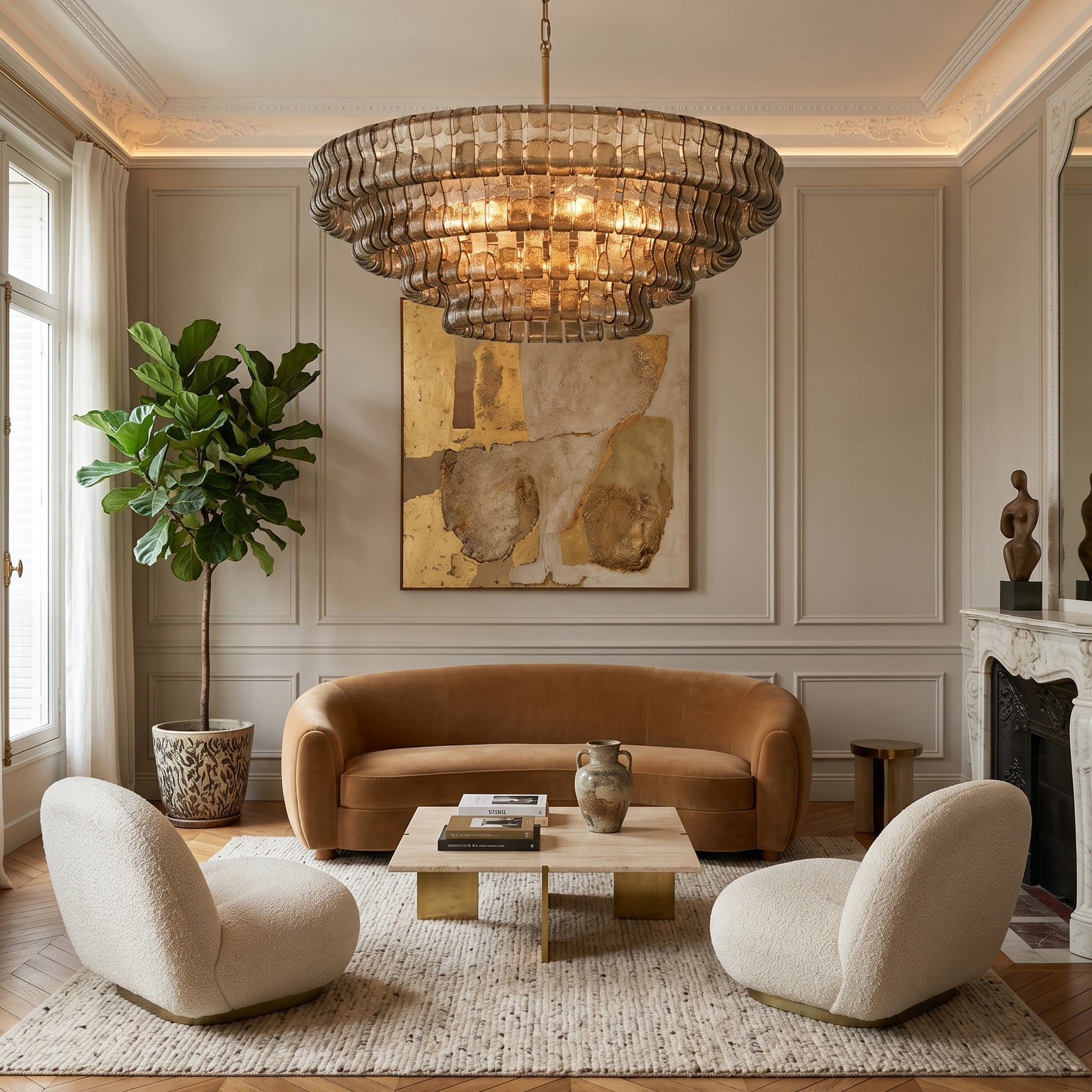
A chandelier that is too small can feel disconnected, while one that is too large can overwhelm the room. The right size and placement help the entire dining area feel balanced.
Before choosing a design, focus on three things:
- The size and shape of your dining table
- The height where the chandelier will hang
- The overall scale of your room

Start With Your Dining Table Size
The dining table should be the starting point, not the chandelier. A common mistake is choosing a fixture based only on how it looks in a product photo. A chandelier that looks perfect online may feel too small or too large once it is installed above your table.
Round Dining Tables
Round tables usually work best with round or centered chandelier designs.
A simple guideline is to choose a chandelier diameter that is about half to two-thirds the width of the table.
For example:
- A 48-inch round table may work well with a chandelier around 24–32 inches wide.
- A larger 60-inch table can support a larger statement fixture.
The goal is to create a visual connection between the table and the chandelier without making the light feel crowded.

Rectangular Dining Tables
Long dining tables often work better with longer chandelier designs.
Linear chandeliers, elongated glass fixtures or multi-light arrangements help follow the direction of the table and create a more balanced look.
A useful guideline:
- The chandelier length should usually be around one-half to two-thirds the length of the table.
For example, a 72-inch dining table may pair well with a chandelier around 36–48 inches long. A fixture that is too short can look lost above a large table, while one that extends too far can make the dining area feel visually heavy.

How High Should a Dining Chandelier Hang?
The most common installation mistake is getting the height wrong.
A chandelier should feel connected to the dining table while still leaving enough space for conversation and clear sightlines. A typical starting point is:
30–36 inches above the tabletop to the bottom of the chandelier

This range works well in many standard dining rooms. However, the ideal height can change depending on:
- Ceiling height
- Chandelier size
- Fixture design
- How open the room feels
A large chandelier with a lot of visual detail may need slightly more breathing room, while a smaller and lighter fixture may sit comfortably a little lower.
Consider Your Ceiling Height
The same chandelier can feel completely different depending on the ceiling.
Standard 8-Foot Ceilings
For rooms with standard ceiling heights, avoid oversized fixtures with excessive drop length. A lower-profile chandelier or a fixture with a more compact silhouette usually creates a better proportion.
9–10 Foot Ceilings
These spaces allow more flexibility. You can consider:
- Larger chandeliers
- More layered glass designs
- Taller sculptural fixtures
The extra height gives the chandelier more room to stand out.
Two-Story Foyers and High Ceilings
Large spaces require a different approach. A chandelier that looks dramatic in a showroom may appear too small in a two-story entryway.
For tall spaces, consider:
- Larger diameter
- Multiple tiers
- Longer vertical proportions
The fixture should fill the space without feeling like a small object hanging in a large room.

Match the Chandelier Shape to Your Table
The shape of the chandelier should support the shape of your dining area.

Round Chandelier
Best for: Round dining tables, square dining rooms, central seating areas.
A round chandelier creates a balanced focal point and works well when the table is the center of the room.
Linear Chandelier
Best for: Rectangular dining tables, long dining spaces, open kitchens with dining areas.
The longer shape follows the table and helps distribute the visual weight evenly.
Sculptural Chandelier
Best for: Minimal dining rooms, open spaces, homes where lighting is meant to be a statement piece.
These fixtures can become the main design element, especially when the surrounding space is kept simple.
Think About Light Quality, Not Just Appearance
A chandelier should look beautiful, but it also needs to provide comfortable light.

Bulb Type and Brightness
A dining room usually needs warm, inviting light rather than harsh brightness. Look for:
- Warm color temperature
- Dimmable options
- Enough light for meals and gatherings
Direct vs Diffused Light
Some chandeliers create focused downward light, while others spread light through glass, shades or decorative elements. For example:
- Clear glass can create more sparkle and reflection.
- Frosted or alabaster materials can soften the glow.
- Open designs may provide more direct illumination.
The best choice depends on whether your dining room needs more atmosphere, more brightness, or a balance of both.
Choose the Style After Getting the Basics Right
Once the size and placement are correct, then consider the design direction. A chandelier should complement the room rather than compete with it.
- Glass chandeliers can add lightness and reflection to modern interiors.
- Alabaster fixtures create a softer, warmer glow.
- Crystal designs bring a more classic feeling.
- Metal fixtures can create a cleaner architectural look.
The material matters, but proportion matters first. A beautiful chandelier in the wrong size will rarely feel right.
Common Dining Room Chandelier Mistakes
Choosing a Fixture That Is Too Small
A small chandelier above a large table can make the room feel unfinished. The light may look attractive by itself, but it will not create the visual balance the space needs.
Hanging It Too High
When a chandelier is installed too close to the ceiling, it loses its connection with the dining table. It starts to feel like a general ceiling light instead of part of the dining area.
Choosing Style Before Measuring
It is easy to fall in love with a chandelier first and think about placement later. A better approach is: Measure your table, check ceiling height, determine scale, then choose style.
Ignoring the View From the Table
Remember that the chandelier will be seen from many angles. Check how it looks while seated, whether it blocks conversation, and if the light feels comfortable at eye level.
A Quick Checklist Before You Buy
Before ordering your dining room chandelier, review these key points:
Final Thoughts
The right dining room chandelier is about balance. It should feel like it belongs with the table, the ceiling and the overall room—not like an object added afterward.
Start with measurements, then choose the style, material and lighting effect that match your space. A well-chosen chandelier does more than brighten the dining room. It helps define the atmosphere where people gather, share meals and spend time together.
Explore Dekorfine’s dining room chandelier collection to find designs created for different table sizes, ceiling heights and interior styles.
Shop Dining Room Lighting