

Murano-style glass chandeliers are easy to judge by color and silhouette. A cluster of glass petals, discs or tubes can look impressive in a product image, but those details do not tell you everything about how the fixture will look, install or age in your home.
Before buying, look beyond the overall shape. The glass structure, density, light source, weight and replacement options all affect the final result.
First, Know What "Murano-Style" Means
"Murano-style" describes lighting inspired by the color, layered glasswork and sculptural forms associated with Murano glass design. It does not automatically mean the fixture was produced on the island of Murano, Italy, or carries official Murano origin certification.
That distinction is worth understanding before you buy.
If documented origin or certification matters to you, check the product provenance separately. For decorative lighting, it is also useful to look beyond the label and compare the glass itself: its shape, color, transparency, thickness, arrangement and how it changes when illuminated.
Look at the Glass Pieces Before the Whole Fixture
A Murano-style chandelier is often built from many individual glass elements rather than one continuous shade. Those pieces may take the form of petals, discs, leaves or tubes, and the shape changes more than the appearance.
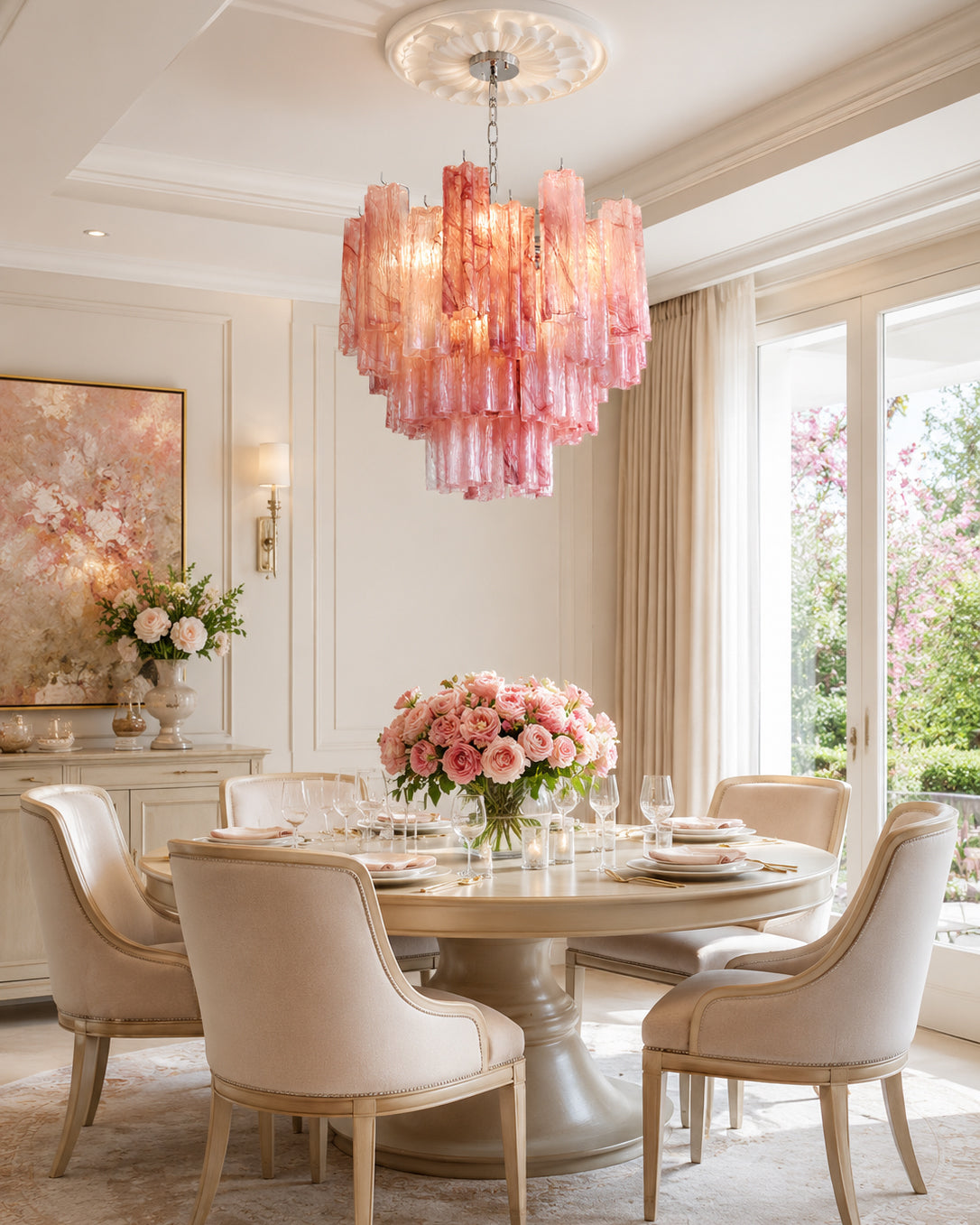
Large curved petals create broader reflections and a fuller silhouette. Round discs can produce repeated highlights through overlapping layers. Long glass tubes emphasize vertical lines and usually make the fixture feel more elongated.
This is why two chandeliers with the same diameter can look completely different once installed — one may appear dense and sculptural, while another of the same width feels lighter because more space remains between the glass pieces.
Before comparing dimensions, look closely at:

The listed diameter tells you how much space the fixture occupies. It does not tell you how visually heavy it will feel.
More Glass Does Not Always Mean a Better Fit
Dense glass layering creates impact, but it also increases visual weight. A chandelier with dozens of overlapping pieces can become the strongest object in the room even when its actual dimensions are moderate — that works well when the light is meant to be the focal point and the surrounding ceiling and furniture are relatively quiet.
In a smaller room, or one that already contains strong pattern and decoration, a more open arrangement may feel better balanced. Look at the empty space between the glass pieces as carefully as the glass itself.

Do I want to notice the glass chandelier first, or do I want it to sit more quietly within the room?
That question is often more useful than simply choosing the largest size that fits.
Judge the Color Both On and Off
Colored glass changes once the light source is switched on. Amber glass can appear deeper and more brown in daylight, then warmer and more golden at night. Pink glass may shift toward peach under warm bulbs. Clear glass can look understated when unlit but become much more reflective once the bulbs are on. Even white or cloudy glass can change depending on the color temperature behind it.
Before choosing a color, try to view the fixture in at least three conditions:
Unlit in natural daylight
Illuminated, under evening light
Close-up, to see actual transparency and surface variation

Product photography taken only with the chandelier switched on can make the glass look brighter or warmer than it will during the day. The opposite is also true: a chandelier that looks quiet when unlit may become much more visually active at night.
Think About the View From Below
Many chandelier product images are photographed straight from the front. That is not how you will usually see the fixture after installation. Over a dining table or kitchen island, the chandelier is often viewed from below and at an angle. In a lower-ceiling room, the underside may be more visible than the front.
Check whether the bottom of the fixture shows:

That is not necessarily a problem, but it should not come as a surprise after installation. Whenever possible, look for an underside photo or an installed room image before ordering.
The Bulb Changes the Glass More Than You'd Expect
The bulb is not just a technical detail in a glass chandelier — its color temperature directly affects the way the glass reads. Warmer light tends to intensify amber, yellow, rose and brown tones. Cooler light can make clear, white or blue glass look crisper, but it may also reduce the warm atmosphere that many people expect from decorative glass lighting.
Bulb visibility matters too. If the bulbs sit behind transparent glass, their shape can become part of the design. A bulb that is too bright or visually bulky may compete with the glass rather than illuminate it.
Before buying, check:

If the glass color is the main reason you are choosing the chandelier, judge it under the type of light you actually plan to use.
Glass Chandeliers Can Be Heavier Than They Look
A fixture made from many individual glass pieces can carry substantial weight. The glass is only one part of that weight — the chandelier may also include a metal frame, rods, sockets, bulbs, mounting hardware and suspension components. Do not estimate weight from diameter alone.

Before ordering, check the listed fixture weight and confirm that the ceiling structure and mounting point are suitable. Larger glass chandeliers may require additional support and more than one person during installation — especially for older ceilings, sloped ceilings, and installations where the fixture will hang far below the mounting point.
Ask About Replacement Glass Before You Need It
Multi-piece glass chandeliers have one practical advantage: the individual glass elements may sometimes be replaceable. That can matter years later — or during installation.
Before purchasing, ask whether:

With handmade or hand-finished glass, small differences between batches can occur. Knowing how replacement glass is handled is far more useful than discovering the policy after one piece has been damaged. A single broken element should not automatically turn an otherwise usable chandelier into a complete replacement project.
Think About Cleaning Before Choosing a Very Layered Design
The glass structure also determines how much maintenance the chandelier will require. Flat discs can collect dust along their upper edges and between overlapping layers. Curved petals and leaves may need to be cleaned individually. Long glass tubes have relatively simple surfaces, but a fixture with dozens of them can still take time to maintain.
The installation height matters just as much. A highly layered chandelier above a dining table may be fairly easy to reach — the same fixture installed in a double-height entryway will be considerably harder to clean.

If the chandelier will hang somewhere difficult to access, consider maintenance while comparing designs rather than after installation.
Before You Order
Before choosing a Murano-style glass chandelier, check:
Whether it is Murano-style, Murano-inspired or certified Murano origin
The shape and spacing of the individual glass pieces
How dense the fixture looks, not only its diameter
How the glass color changes when illuminated
What the chandelier looks like from below
The bulb base, quantity and color temperature
The actual fixture weight and mounting requirements
Whether individual replacement glass is available
How easy the design will be to clean once installed
A Murano-style chandelier should be considered as both a light fixture and a structure made from many pieces of glass. The color may attract you first, but the glass density, underside, bulb, weight and replacement options will have more influence on how practical the fixture feels after installation.
Explore Dekorfine's Murano-style glass chandeliers and compare the glass shape, color, size and installation details before choosing the right piece for your space.
Shop Murano-Style ChandeliersEvery Piece Reads the Light Differently
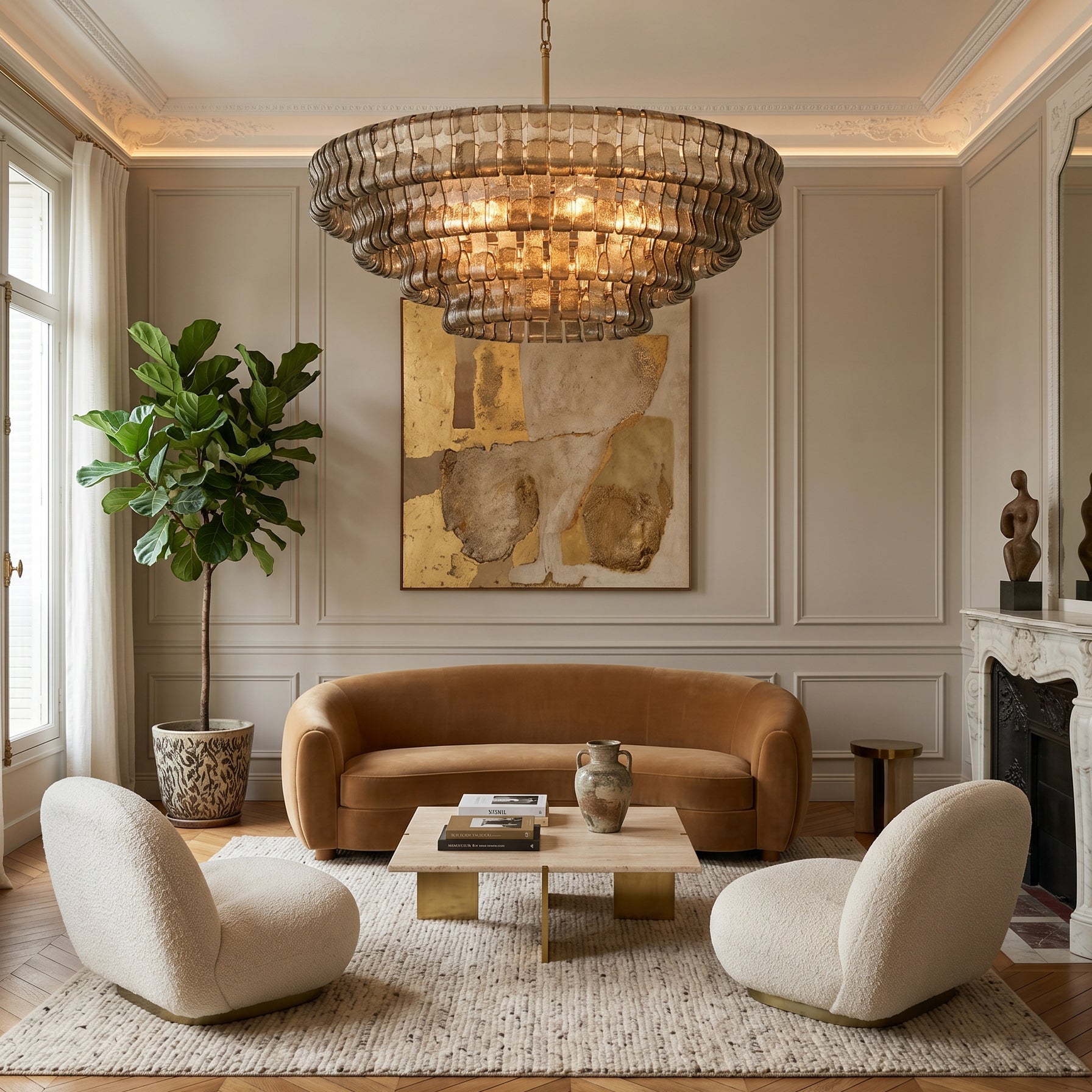
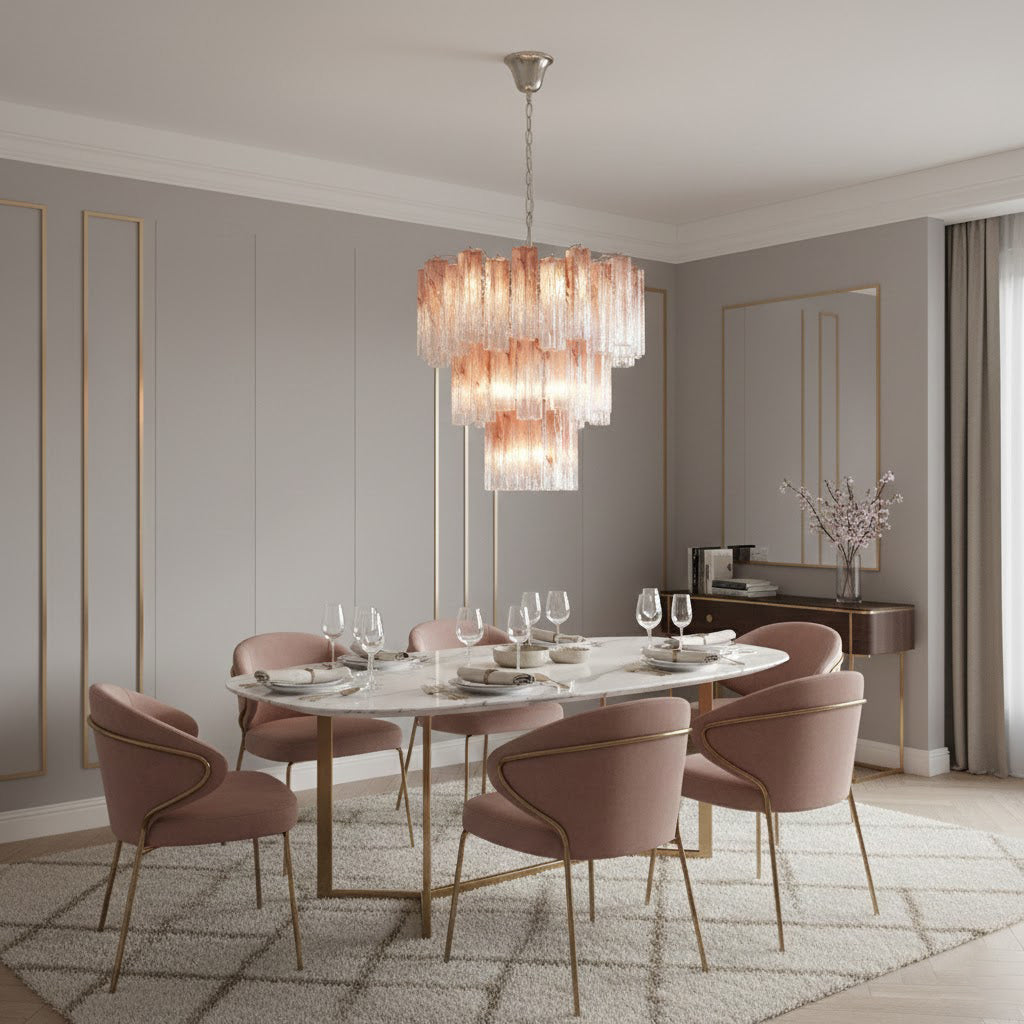
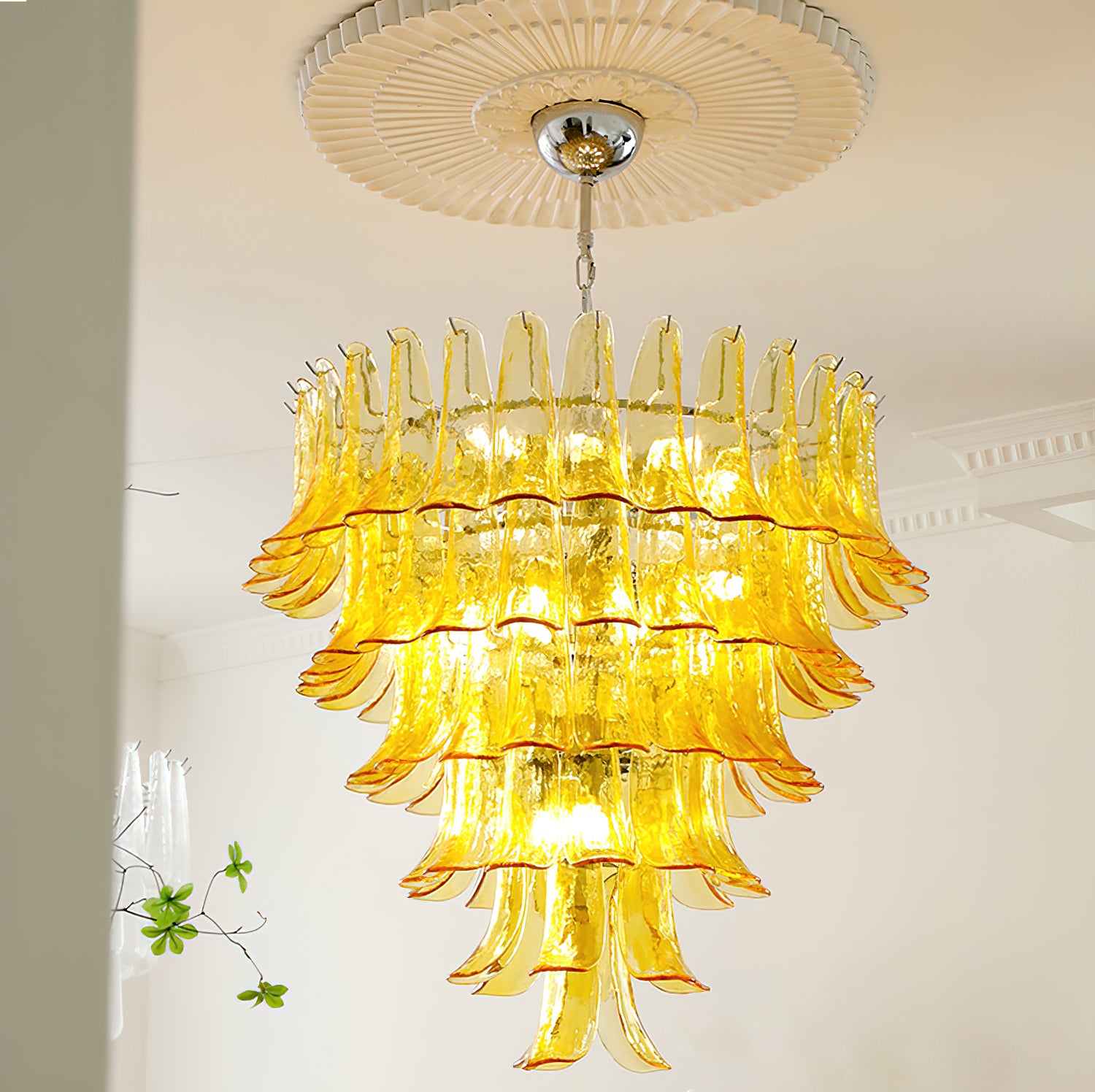
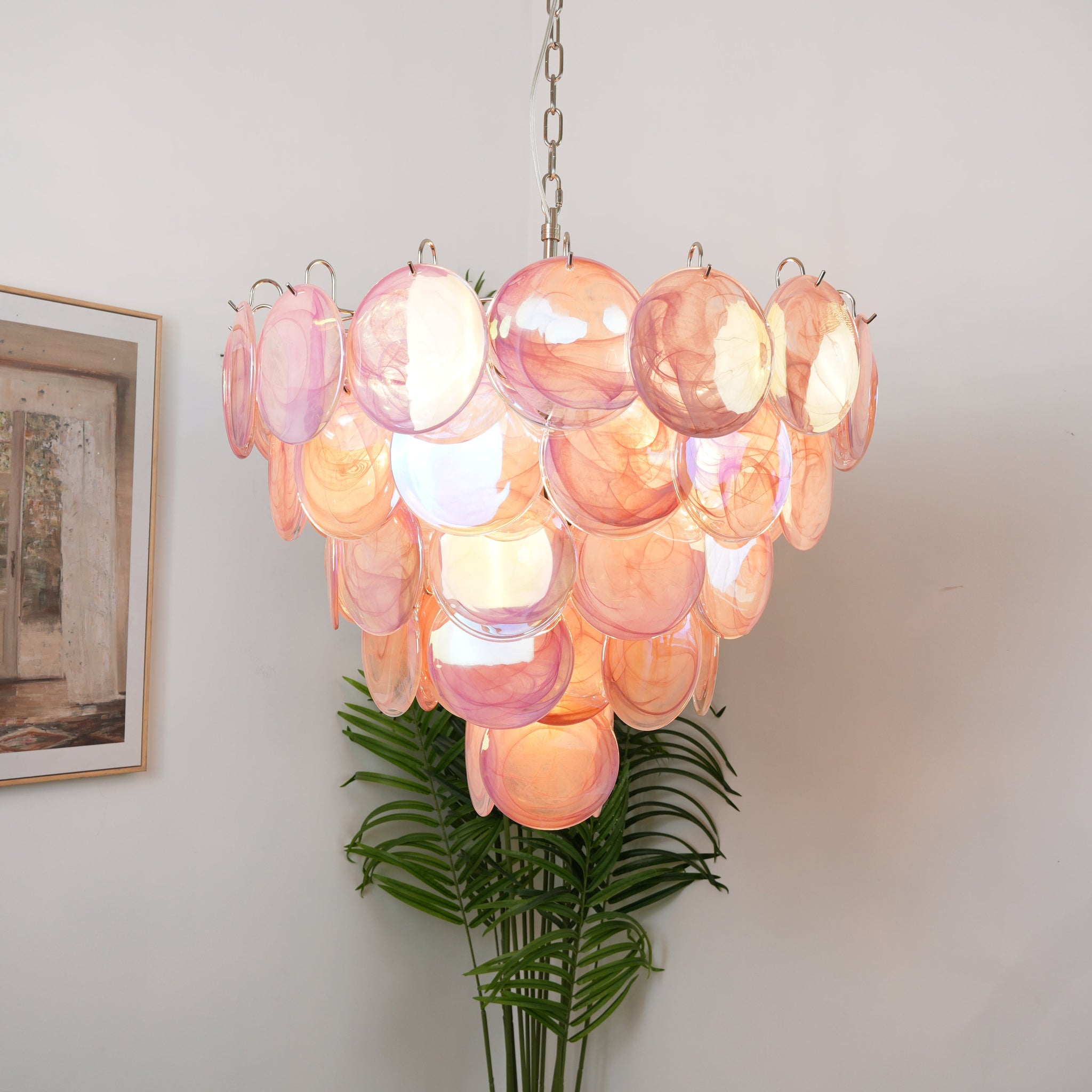


Hover to pause · click any piece to shop it


